
Abstract
Hormonal imbalances are implicated in a wide range of physiological disorders, including reproductive health issues, metabolic dysfunctions, and mood disorders. Reflexology, a complementary therapy involving targeted pressure to specific reflex zones on the feet, hands, or ears, has been explored for its potential to modulate endocrine function. This article reviews the theoretical foundations, clinical observations, and preliminary research supporting the use of reflexology in hormonal regulation. While mechanisms remain incompletely understood, findings suggest that reflexology may aid in restoring hormonal homeostasis through its effects on the nervous system, stress reduction, and targeted reflex stimulation.
1. Introduction
The endocrine system plays a critical role in maintaining internal homeostasis through the release of hormones. Disruptions in hormonal balance can result from chronic stress, lifestyle factors, disease states, or aging. Common manifestations include menstrual irregularities, thyroid dysfunction, adrenal fatigue, and symptoms related to menopause or polycystic ovary syndrome (PCOS). While pharmacological treatments are widely used, many individuals seek complementary therapies to reduce reliance on medication and support natural regulation. Reflexology, by stimulating reflex points corresponding to endocrine glands, offers a holistic and non-invasive approach to supporting hormonal balance.
2. Theoretical Foundations of Reflexology in Endocrine Support
2.1 Reflex Points and Endocrine Glands
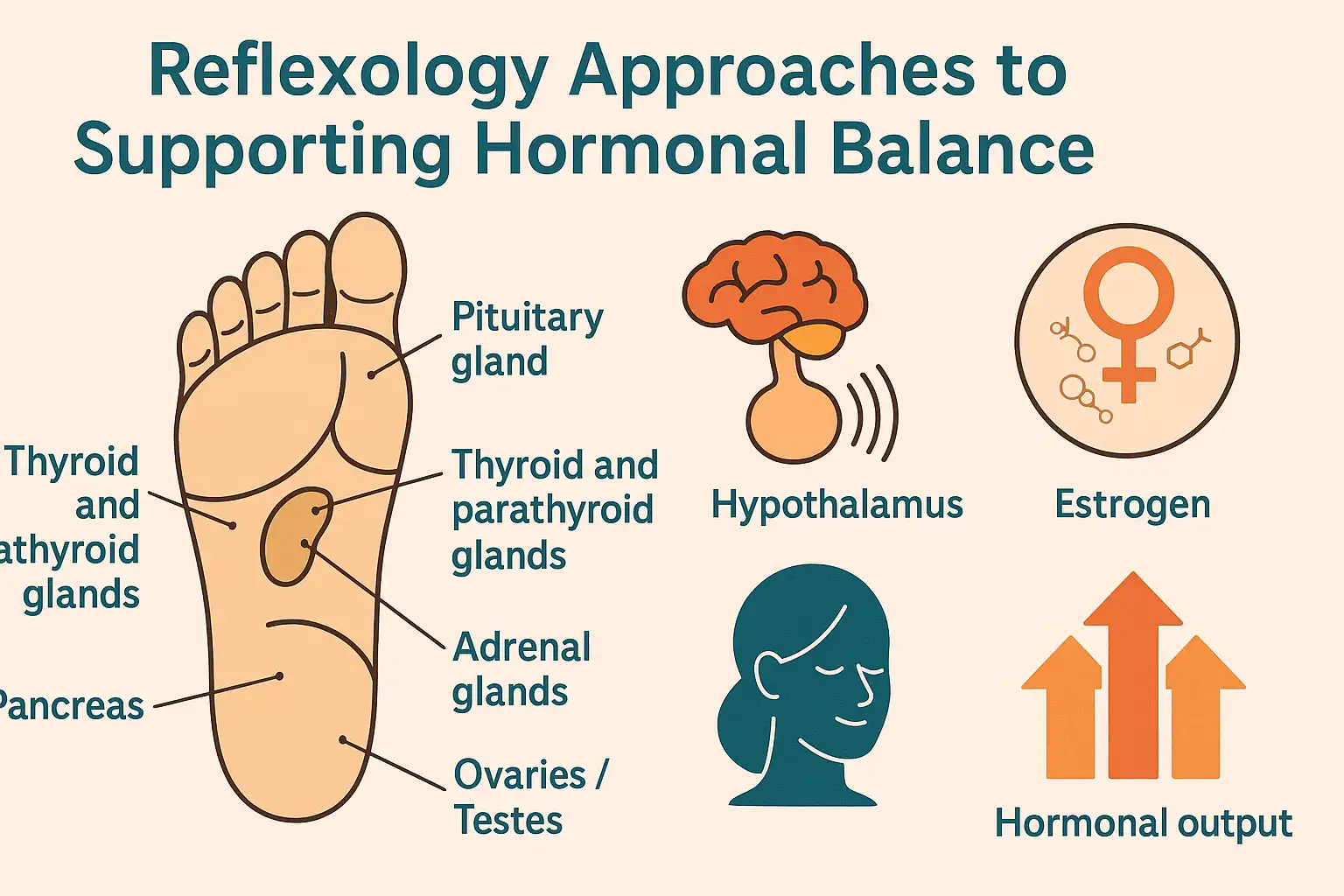
In reflexology charts, specific areas on the feet and hands correspond to major endocrine organs:
- Pituitary gland – center of the big toe
- Thyroid and parathyroid glands – base of the big toe
- Adrenal glands – mid-arch of the foot
- Pancreas – inner arch
- Ovaries/Testes – lateral heel areas
By applying pressure to these zones, reflexologists aim to influence glandular activity and promote homeostasis.
2.2 Neurological and Hormonal Interactions
Reflexology is thought to affect the hypothalamic-pituitary-adrenal (HPA) axis via stimulation of sensory nerve endings, influencing autonomic responses and, in turn, endocrine output. This may help normalize the secretion of hormones such as cortisol, estrogen, insulin, and thyroid hormones.
3. Clinical Applications and Observations
3.1 Menstrual and Reproductive Health
Several observational studies and case reports suggest reflexology may be effective in managing symptoms related to:
- Premenstrual syndrome (PMS)
- Dysmenorrhea (painful menstruation)
- Polycystic ovary syndrome (PCOS)
- Irregular menstrual cycles
In a 2014 randomized trial, women with menstrual irregularities reported improved cycle regularity and reduced PMS symptoms following 8 weeks of reflexology treatment.
3.2 Menopause and Hormonal Transitions
Hot flashes, mood swings, and insomnia are common during menopause. Reflexology has been reported to:
- Improve sleep quality
- Reduce anxiety
- Alleviate vasomotor symptoms
These effects may relate to modulation of estrogen-related feedback mechanisms through parasympathetic activation.
3.3 Thyroid and Adrenal Function
Chronic stress is known to disrupt adrenal hormone output, including cortisol and aldosterone. Reflexology may help restore adrenal balance through stress reduction, potentially alleviating symptoms of fatigue and metabolic sluggishness. Anecdotal evidence suggests improved energy levels and reduced anxiety in individuals with subclinical hypothyroidism.
4. Evidence and Research Limitations
4.1 Preliminary Studies
Although empirical evidence is still emerging, small-scale studies and pilot trials provide support for reflexology’s hormonal effects:
- Hormonal assays: Some studies have recorded changes in salivary cortisol and serum estrogen following reflexology interventions.
- Subjective outcomes: Many studies report reductions in stress, pain, and fatigue—factors known to influence hormonal rhythms.
4.2 Methodological Constraints
Despite promising findings, the scientific evidence remains limited by:
- Small sample sizes
- Lack of standardization in reflexology protocols
- Difficulty establishing appropriate placebo controls
- Reliance on subjective self-report measures
5. Integrative and Holistic Implications
Reflexology should not be seen as a replacement for endocrine therapies but as a complementary method that can support the body’s natural regulatory mechanisms. When used as part of an integrative health plan—alongside diet, exercise, and medical care—it may offer valuable benefits in enhancing overall hormonal stability.
6. Conclusion
Reflexology represents a promising adjunctive therapy in supporting hormonal balance, particularly for stress-related endocrine imbalances and reproductive health concerns. While more rigorous research is needed to establish causality and standardized guidelines, existing evidence supports its role in enhancing relaxation, modulating autonomic function, and potentially influencing hormonal output. Future studies should focus on biochemical validation and long-term outcomes to clarify its therapeutic value.
References
- McVicar, A. H., Greenwood, C. R., Fewell, F., et al. (2013). Reflexology as a complementary therapy for menstrual discomfort: A randomized controlled trial. Complementary Therapies in Clinical Practice, 19(4), 211–218.
- Hughes, C. M., Krirsnakriengkrai, S., Kumar, S., & McDonough, S. M. (2011). Effect of reflexology on hormonal symptoms in menopausal women: A pilot study. Complementary Therapies in Medicine, 19(5), 231–237.
- Oleson, T., & Flocco, W. (1993). Randomized controlled study of premenstrual symptoms treated with ear, hand, and foot reflexology. Obstetrics & Gynecology, 82(6), 906–911.