
Abstract
Reflexology has emerged as a widely practiced complementary therapy for promoting relaxation, managing pain, and supporting various health conditions. Despite its popularity and growing empirical support, reflexology practice lacks consistent global standards regarding session structure. Variations in application duration, pressure intensity, and session frequency contribute to inconsistencies in outcomes and research findings. This paper reviews current literature and practice trends to explore the need for and implications of standardizing reflexology sessions. Recommendations are proposed to improve efficacy, reproducibility, and integration into clinical settings.
1. Introduction
Reflexology is based on the principle that specific points on the feet, hands, or ears correspond to different organs and systems in the body. While the underlying theories may vary across regions, the manual stimulation of these reflex points aims to promote balance and improve health outcomes. However, reflexology’s clinical and research applications are hindered by a lack of standardization in key session parameters such as duration, pressure applied, and treatment frequency. These inconsistencies reduce comparability across studies and may affect therapeutic results. Establishing standardized practices would benefit practitioners, researchers, and patients alike.
2. Session Duration: Current Practices and Evidence
2.1 Typical Durations
Reflexology sessions vary widely in length:
- Short sessions: 15–30 minutes, commonly used in hospitals, palliative care, or outpatient clinics.
- Standard sessions: 45–60 minutes, typically used in private practice or wellness centers.
- Extended sessions: 75–90 minutes, sometimes applied in therapeutic programs for chronic conditions.
2.2 Clinical Findings on Duration
Studies suggest that session duration influences outcomes:
- A 2013 trial (Stephenson et al.) found that 30-minute sessions twice weekly for cancer patients significantly reduced pain and anxiety.
- In a 2017 study (Lee & Ko), 60-minute reflexology sessions produced more sustained blood pressure reduction compared to 20-minute sessions.
Conclusion: 45–60 minutes appears optimal for clinical and relaxation effects, though shorter durations may be effective in acute care settings.
3. Pressure Intensity: Variability and Impact
3.1 Types of Pressure
Pressure applied during reflexology is generally categorized as:
- Light: Surface-level, often used in fragile or elderly populations
- Moderate: Common for general wellness and preventive care
- Firm/deep: Often applied in cases of chronic pain or dense muscular tissue
3.2 Pressure and Patient Response
- High pressure may stimulate stronger responses, including temporary discomfort or detoxification-like symptoms.
- A study by Hodgson (2010) found that moderate pressure was most effective in reducing anxiety without adverse effects.
- Excessive pressure may deter clients or be contraindicated in certain health conditions.
Recommendation: Pressure should be individualized based on sensitivity, age, and clinical goals, but moderate, consistent pressure is generally effective and well tolerated.
4. Frequency of Sessions: Protocols and Outcomes
4.1 Common Frequencies in Practice
- Acute conditions: 2–3 sessions per week for 2–4 weeks
- Chronic conditions: Weekly sessions over 6–12 weeks
- Maintenance/wellness: Bi-weekly or monthly sessions
4.2 Evidence-Based Scheduling
- Yoo & Lee (2010) demonstrated that reflexology administered twice a week over 6 weeks significantly improved fibromyalgia symptoms.
- Kim et al. (2015) found that weekly sessions for 8 weeks helped regulate blood glucose levels in diabetic patients.
Guidance: For therapeutic purposes, weekly or biweekly sessions sustained over multiple weeks appear to be the most beneficial frequency.
5. Toward Standardization: Benefits and Challenges
5.1 Benefits of Standardization
- Improved research quality: Consistent protocols improve data comparability and replication.
- Clinical credibility: Enables integration into formal healthcare systems.
- Training and certification: Provides benchmarks for professional competency.
5.2 Challenges
- Patient variability: Individual response and tolerance levels differ.
- Cultural diversity: Regional traditions and philosophies influence practice.
- Lack of regulatory oversight: Many countries lack formal reflexology standards.
6. Proposed Guidelines for Standard Reflexology Sessions
| Parameter | Recommendation |
|---|---|
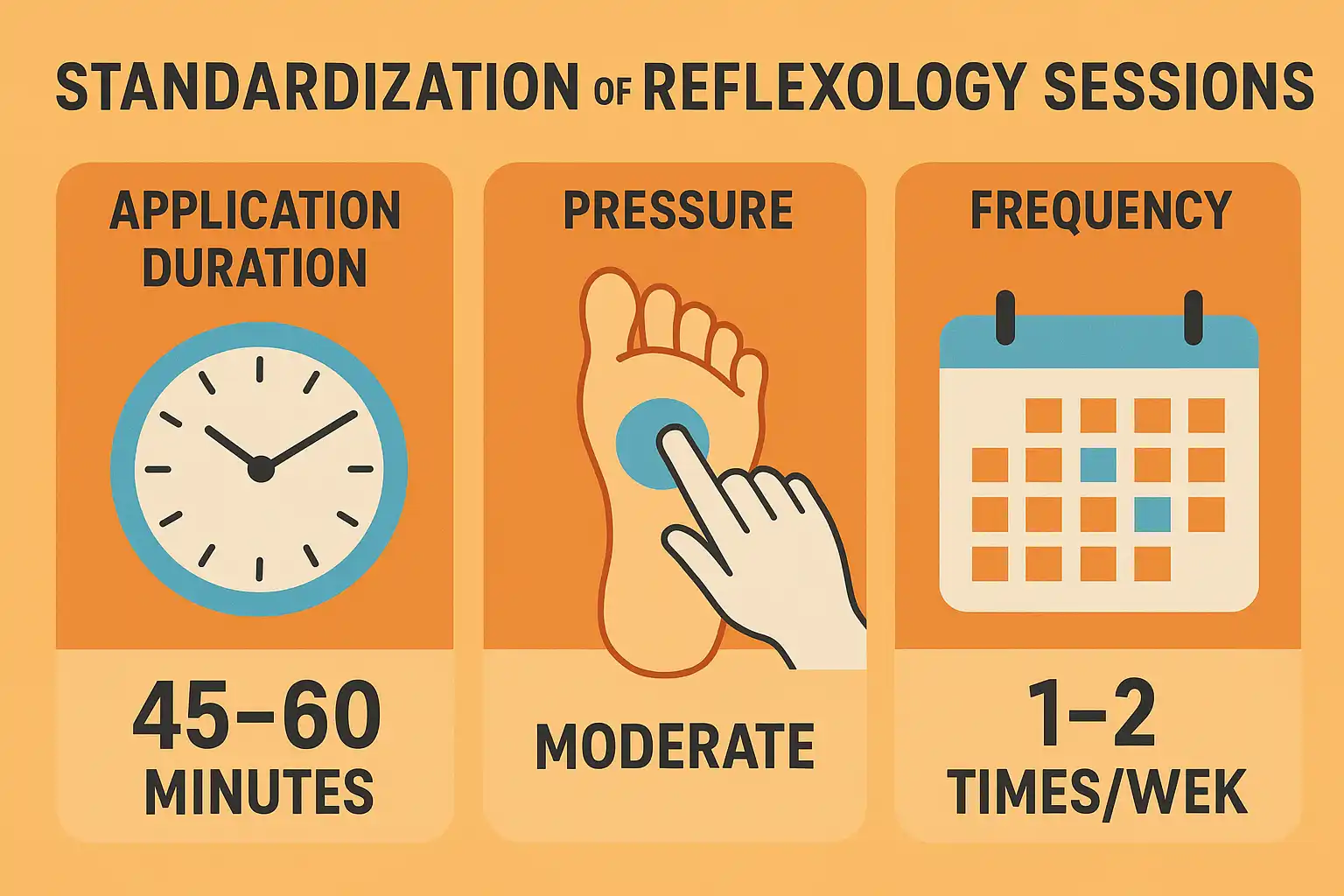
| Duration | 45–60 minutes for general therapy |
| Pressure | Moderate, individualized based on patient needs |
| Frequency | 1–2 times/week for 4–8 weeks for clinical outcomes |
These serve as general guidelines and should be adapted to client conditions, preferences, and cultural contexts.
7. Conclusion
Standardization in reflexology practice—particularly in terms of session duration, pressure, and frequency—can enhance therapeutic outcomes, research reliability, and professional integrity. While personalization remains important, having foundational guidelines can bridge the gap between traditional healing and evidence-based practice. Further studies are needed to refine these standards across populations and clinical indications.
References
- Stephenson, N. L., Swanson, M. (2013). The effects of foot reflexology on pain and anxiety in patients with cancer. Oncology Nursing Forum, 40(4), 361–369.
- Yoo, E. K., & Lee, S. M. (2010). Effects of foot reflexology on fatigue, sleep, and pain in fibromyalgia patients. Journal of Korean Academy of Nursing, 40(1), 1–9.
- Kim, J. H., Kim, M. Y., & Lee, H. (2015). The impact of foot reflexology on glycemic control in type 2 diabetes patients. Complementary Therapies in Clinical Practice, 21(3), 180–185.
- Hodgson, H. (2010). Does reflexology reduce anxiety? A review of randomized controlled trials. Complementary Therapies in Clinical Practice, 16(2), 64–69.