
Abstract
Reflexology is gaining increasing interest as a complementary approach in pain management. This article examines the effects of reflexology in chronic pain conditions such as fibromyalgia and migraine, and evaluates findings in light of current scientific literature. The results suggest that reflexology can exhibit pain-relieving effects at both physiological and psychological levels.
1. Introduction
Chronic pain is a widespread health issue that significantly impairs individuals’ quality of life. Fibromyalgia and migraine are two major pain disorders of neurophysiological origin, involving complex mechanisms and not always responding well to conventional treatments. In this context, complementary methods like reflexology have been considered as drug-free supportive alternatives.
2. The Role of Reflexology in Pain Management
Reflexology aims to create therapeutic effects in organs and systems by applying pressure to specific points on the body, particularly on the feet and hands. Potential mechanisms through which reflexology may aid in pain management include:
- Endorphin release: Reflex stimulation can trigger the release of the body’s natural painkillers.
- Regulation of the autonomic nervous system: Increasing parasympathetic activity may lead to relaxation and reduced stress.
- Gate control theory: External stimuli may inhibit pain transmission at the spinal cord level.
3. Fibromyalgia and Reflexology
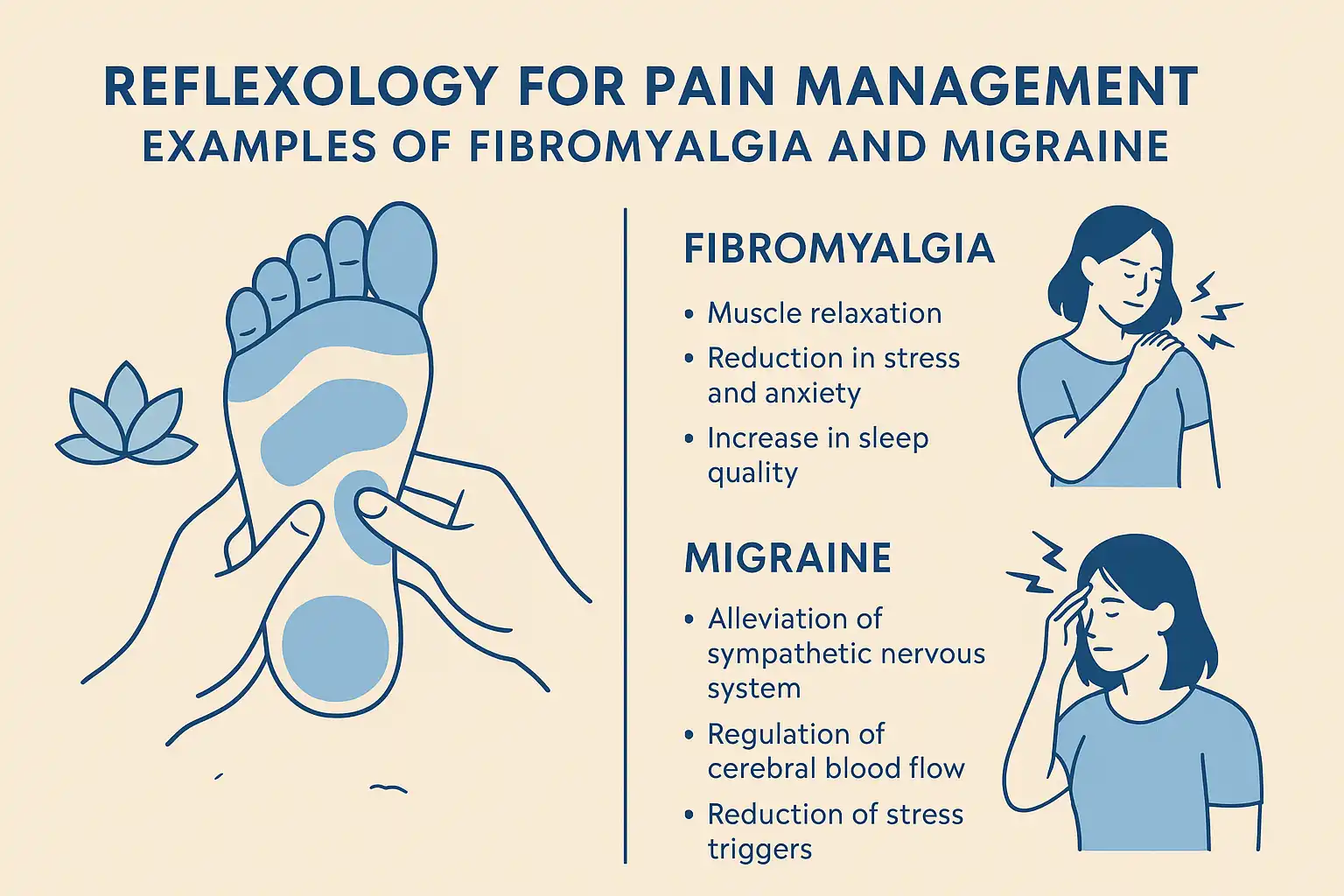
Fibromyalgia is characterized by widespread musculoskeletal pain, fatigue, and sleep disturbances. Reflexology sessions have shown the following effects:
- Relaxation of soft tissue
- Reduction in stress and anxiety levels
- Improvement in sleep quality
- Decrease in subjective pain intensity
Research Example:
A randomized controlled trial by Yoo and Lee (2010) reported that reflexology sessions conducted twice a week for six weeks significantly reduced pain scores and depression levels in patients with fibromyalgia.
4. Migraine and Reflexology
Migraine is a neurovascular disorder often presenting with unilateral, throbbing headaches and neurological symptoms. Reflexology’s effects on migraine may include:
- Soothing of the sympathetic nervous system
- Regulation of cerebral blood flow
- Reduction of stress-related triggers
Research Example:
Moraska et al. (2011) demonstrated that reflexology treatments significantly reduced both the frequency and duration of migraine attacks. Seventy percent of participants reported a reduction in pain frequency.
5. Discussion
Reflexology should be regarded as a complementary—not curative—method in the treatment of fibromyalgia and migraine. Its ability to provide psychological and neurophysiological relief allows it to hold a valuable position among non-pharmacological interventions.
6. Conclusion
Reflexology can be considered an effective and safe complementary therapy for symptom management in chronic pain conditions such as fibromyalgia and migraine. Further large-scale, controlled clinical studies are needed to clarify its effectiveness and facilitate its broader application on a scientific basis.
References
- Yoo, E. K., & Lee, S. M. (2010). Effects of foot reflexology on fatigue, sleep and pain in fibromyalgia patients. Journal of Korean Academy of Nursing, 40(1), 1–9.
- Moraska, A. F., Chandler, C., Edmiston-Schaetzel, A., et al. (2011). Reflexology for migraine: A pilot study. The Journal of Alternative and Complementary Medicine, 17(2), 139–145.
- Kunz, B., & Kunz, K. (2008). Reflexology: Health at your fingertips. Reflexology Research Project.