
Abstract
Foot therapy practices have long been employed across cultures for their therapeutic benefits, especially in managing pain, promoting relaxation, and supporting overall well-being. Two prominent modalities in this field are reflexology and acupressure. While both involve manual pressure techniques applied to the feet, they are rooted in different cultural traditions and medical philosophies. This article explores the historical origins, theoretical foundations, and practical applications of reflexology and acupressure, highlighting key differences in their methods, diagnostic principles, and cultural contexts. The comparative analysis aims to provide a deeper understanding of these therapies and their roles in integrative and complementary health care.
1. Introduction
Foot therapy has evolved across many civilizations as a response to the belief that the feet serve as mirrors of the body’s internal health. Reflexology and acupressure are two distinct yet often conflated practices. Despite their superficial similarities—manual pressure, focus on the feet, and non-invasive nature—their underlying philosophies, techniques, and scopes differ significantly. Understanding these differences is crucial for clinicians, therapists, and individuals seeking culturally-informed complementary therapies.
2. Historical and Cultural Backgrounds
2.1 Reflexology
Reflexology finds its roots in multiple ancient cultures, notably Ancient Egypt, China, and India, but was developed into a formal practice in the West during the early 20th century. Dr. William Fitzgerald introduced “zone therapy” in the 1910s, later refined by Eunice Ingham, who mapped the entire body onto the feet and hands.
- Cultural origin: Modern Western therapy based on earlier Egyptian and Chinese influences
- Primary focus: Correspondence between reflex zones and internal organs
- Cultural philosophy: Holistic and functional body mapping
2.2 Acupressure
Acupressure is an ancient practice from Traditional Chinese Medicine (TCM). Developed over 2,000 years ago, it evolved alongside acupuncture and shares the same theoretical foundation of Qi (vital energy) flowing through meridians.
- Cultural origin: Ancient China
- Primary focus: Regulation of Qi and balance of Yin-Yang via meridians
- Cultural philosophy: Energetic equilibrium and organ interrelationships
3. Theoretical Foundations
3.1 Reflexology Theory
Reflexology is grounded in the belief that specific zones on the feet and hands correspond to all glands, organs, and systems of the body. Applying pressure to these zones is thought to stimulate energy flow and restore physiological balance.
- Zone theory: The body is divided into ten vertical zones
- Reflex mapping: Visual charts guide pressure point location
- Mechanism: Neural pathways, endorphin release, and relaxation response
3.2 Acupressure Theory
Acupressure is based on TCM meridian theory, where energy blockages in meridians are thought to cause illness. Applying pressure to acupoints on these meridians helps restore flow and promote healing.
- Meridian theory: 12 primary meridians linked to organ systems
- Point selection: Individualized based on symptom patterns
- Mechanism: Qi modulation, hormonal and neurological shifts
4. Practical Applications and Techniques
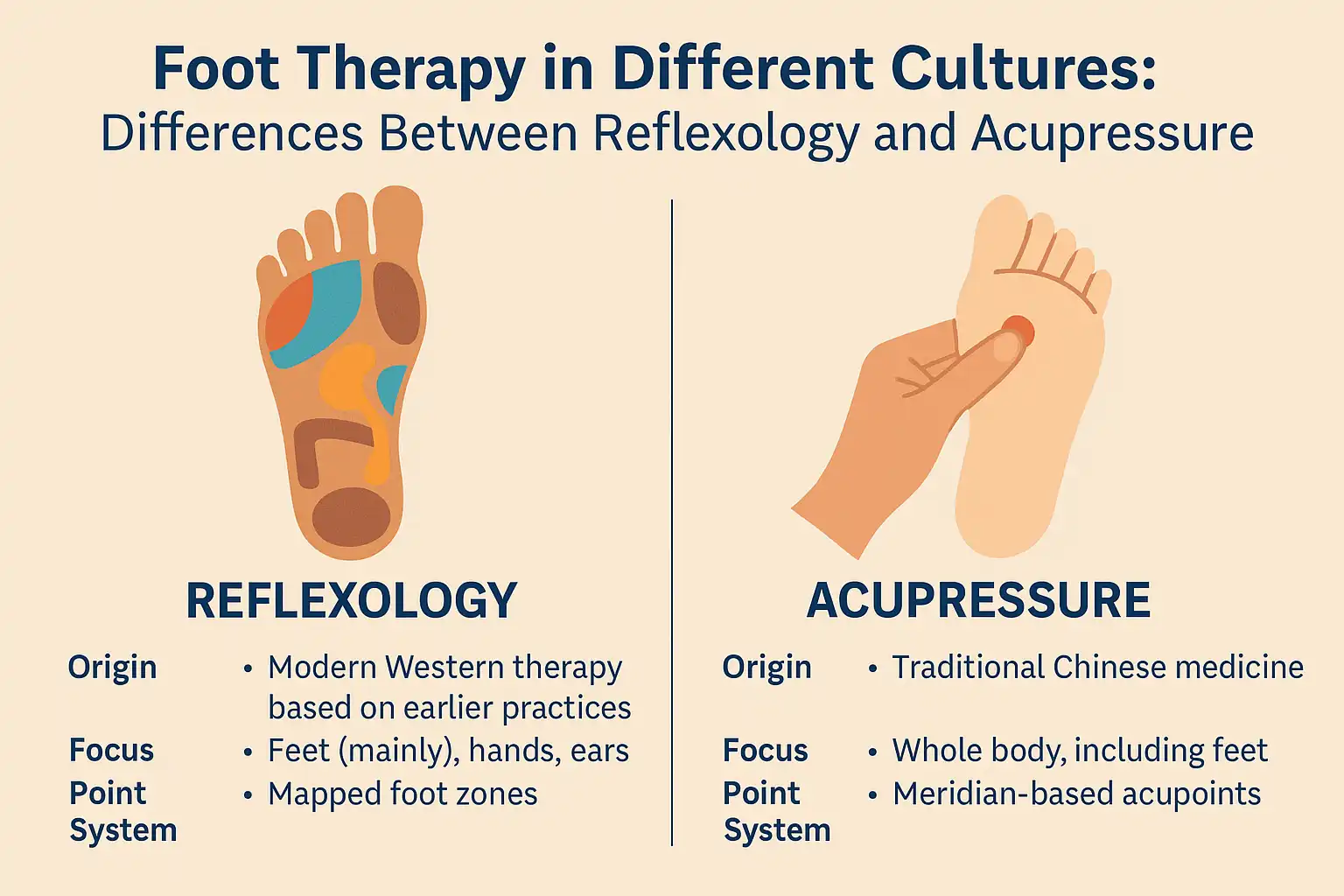
| Feature | Reflexology | Acupressure |
|---|---|---|
| Focus area | Feet (primarily), hands, ears | Whole body, including feet |
| Point system | Mapped foot zones | Defined meridian-based acupoints |
| Diagnostic method | Reflex tenderness or imbalance | Pulse, tongue diagnosis (TCM principles) |
| Session style | Structured, zone-based | Individualized, symptom-specific |
| Tools used | Hands, fingers | Hands, fingers, sometimes special tools |
5. Therapeutic Outcomes
Both therapies aim to improve physical and emotional well-being, but their emphasis differs:
- Reflexology: Commonly used for stress relief, digestive issues, chronic pain, and overall relaxation.
- Acupressure: Used for broader conditions, including headaches, menstrual issues, insomnia, fatigue, and immune support.
Evidence supports both approaches for symptom relief, though reflexology is often integrated into Western clinical environments, whereas acupressure remains closely linked to Eastern holistic health systems.
6. Scientific Research and Evidence
- A 2011 review in Complementary Therapies in Clinical Practice found that reflexology reduced pain and anxiety in cancer patients.
- Studies on acupressure have shown positive effects on nausea, fatigue, and sleep disorders, particularly in chemotherapy and perioperative settings.
- Both modalities face methodological challenges in research, such as placebo controls and standardization of treatment protocols.
7. Conclusion
Reflexology and acupressure represent two culturally rich and therapeutically valuable foot therapy traditions. Though both involve manual pressure and promote systemic wellness, they differ in origins, principles, and execution. Reflexology emphasizes structured zone-based pressure aligned with organ systems, while acupressure draws from meridian theory and individualized energetic assessments. Acknowledging these differences enhances clinical decision-making and deepens respect for global healing traditions.
References
- Kunz, B., & Kunz, K. (2008). Reflexology: Health at Your Fingertips. Reflexology Research Project.
- Ingham, E. (1938). Stories the Feet Can Tell. National Institute of Reflexology.
- Lee, E. J., Frazier, S. K. (2011). The efficacy of acupressure for symptom management: A systematic review. Journal of Pain and Symptom Management, 42(4), 589–603.
- Li, H., Zhao, Y., et al. (2015). Effects of acupressure on sleep quality: A meta-analysis. Complementary Therapies in Medicine, 23(5), 577–584.
- Stephenson, N. L., Swanson, M. (2003). Effects of reflexology on anxiety and pain in women with breast cancer. Oncology Nursing Forum, 30(1), 127–132.