
Abstract
Reflexology is a complementary therapy based on the principle that applying pressure to specific areas of the body can produce therapeutic effects on internal organs and systems. This paper examines the physiological and neurological basis of foot and hand reflex maps, exploring their potential connections to the central nervous system.
1. Introduction
Reflexology aims to stimulate specific points on the feet, hands, or ears to influence various parts of the body. While rooted in traditional Eastern medicine, it has become a topic of scientific investigation in modern healthcare systems. This article explores the physiological logic and neurological pathways underlying reflex points and their relationship to internal organs.
2. Anatomical Basis of Reflex Maps
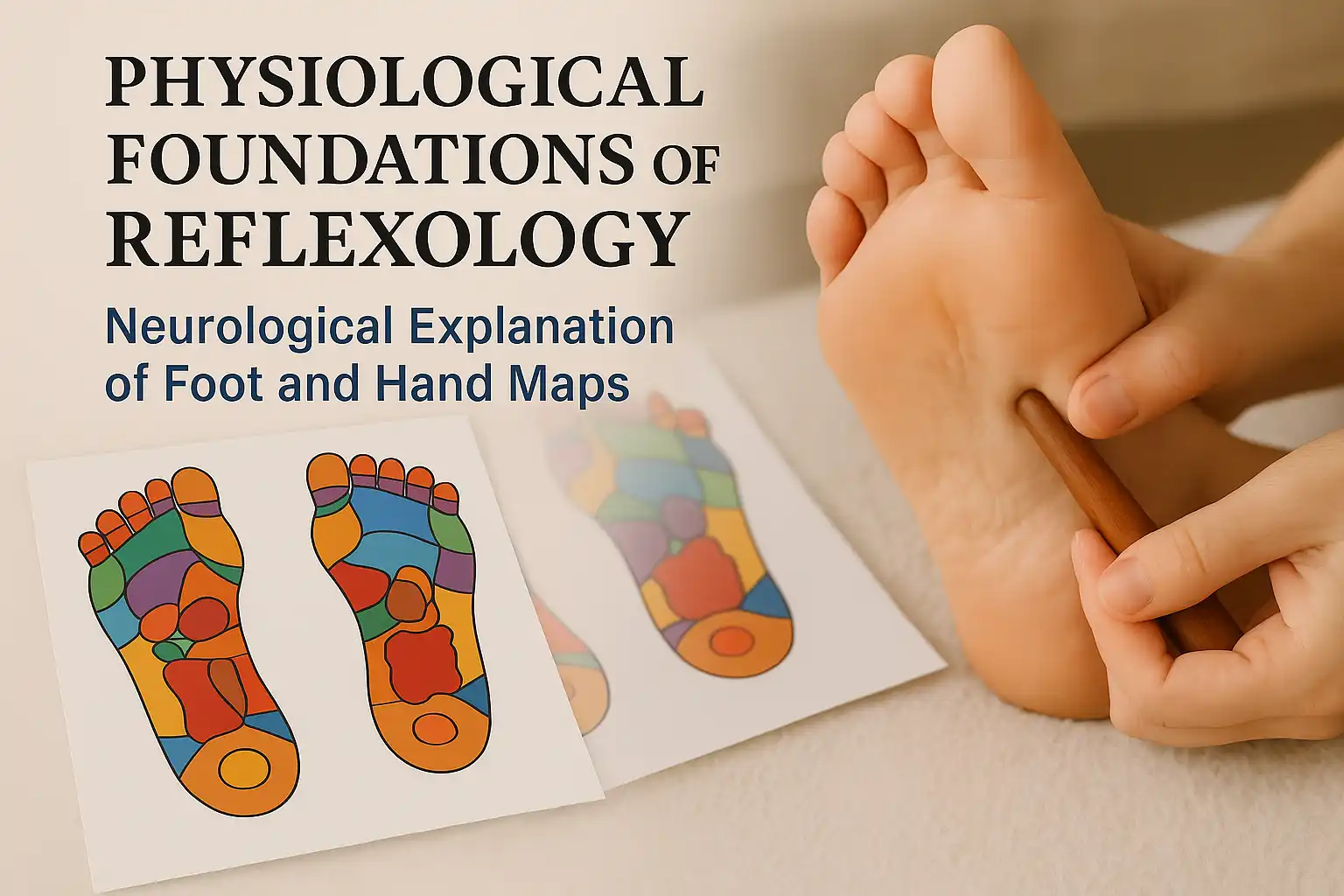
Reflex maps divide the feet and hands into zones that are thought to correspond with organs and body systems. For example:
- The big toe is linked to the head and brain.
- The arch of the foot corresponds with the spine.
- The hands are often associated with upper-body organs.
These zones are believed to align with somatotopic mapping, a neurological concept in which the body is represented in specific, organized regions of the brain and spinal cord.
3. Neurological Explanations
Several neurological mechanisms may help explain reflexology’s effects:
- Interaction between somatic and autonomic nervous systems: Nerves in the feet and hands (e.g., tibial, peroneal, radial, and median nerves) send signals via the spinal cord to the brain. Pressure on reflex points may activate afferent (sensory) pathways and provoke autonomic or motor responses.
- Gate Control Theory of Pain: Pressure applied during reflexology may block pain signals at the spinal cord level, reducing pain perception.
- Fascial and neural network interactions: The dense nerve endings in the feet may stimulate responses in the brain cortex, possibly related to the sensory homunculus — a representation of the body’s regions in the brain.
4. Scientific Findings and Experimental Studies
- Studies using EEG and fMRI have shown that stimulation of foot reflex zones activates specific areas in the brain (Wang et al., 2008).
- Reflexology has been observed to positively influence heart rate, skin temperature, and stress indicators (McVicar et al., 2007).
- Ongoing studies suggest potential regulatory effects on the digestive, respiratory, and endocrine systems.
5. Discussion
Although anatomical correlations between reflex zones and internal organs remain scientifically debated, reflexology may engage neurological mechanisms through somatic-visceral connections. Beyond placebo, its effects could involve the integration of sensory input within the central nervous system.
6. Conclusion
While further controlled research is needed, current findings suggest that reflexology has potential physiological impacts. Understanding the neurological underpinnings of foot and hand reflex points could strengthen reflexology’s standing as a credible complementary health modality.
References
- Wang, M. Y., et al. (2008). Brain activation during foot reflexology: An fMRI study. Complementary Therapies in Medicine, 16(4), 260–263.
- McVicar, A. J., Greenwood, C. R., et al. (2007). The impact of reflexology on anxiety and pain in patients with cancer. International Journal of Nursing Practice, 13(1), 22–30.
- Kunz, B., & Kunz, K. (2003). Understanding the Science and Art of Reflexology. Reflexology Research Project.